


That “not available in your region” message always shows up at the worst time – right before a live match, during a work trip, or when you need access to a site you use every day. If you’re wondering how to bypass geo blocks without turning your connection into a buffering mess or exposing your data, the answer is usually simpler than people think. You need the right route, the right server, and a service that treats speed and privacy as part of the same job.
What geo blocks actually do
Geo blocks are location-based restrictions. A website, streaming platform, app, or online service checks your IP address, compares it to a country or region, and then decides what you can see. If your IP appears to come from the wrong place, access is limited or denied.
That system is common across entertainment, ecommerce, sports broadcasts, financial dashboards, and even school or workplace tools. Sometimes it comes down to licensing agreements. Sometimes it is compliance, fraud prevention, or local policy. Either way, the result is the same: you are online, but not really free to access what you need.
This is why users search for ways to change their apparent location. They are not trying to make the internet more complicated. They are trying to make it work.
How to bypass geo blocks without guessing
The most reliable way to bypass geo blocks is to connect through a VPN server in the country where the content or service is available. When you do that, the site sees the VPN server’s IP address instead of your local one. As far as the platform is concerned, your connection is coming from the allowed region.
That sounds straightforward because it is. The catch is that not every VPN performs well enough to make the experience worth it. Some servers are overloaded. Some IP ranges are already flagged. Some services are easy to install but weak where it matters most: consistency, speed, and privacy under real-world use.
A strong setup should do three things at once. It should mask your location, encrypt your traffic, and maintain enough speed for whatever you’re actually doing, whether that is watching HD video, joining a meeting, or logging into a business dashboard from a hotel Wi-Fi network.
The basic process
Start by choosing a VPN with servers in the region you need. Install the app on your device, sign in, and connect to a server in that country. Then refresh the site or reopen the app you were trying to access.
If it still does not work, switch servers in the same region. This matters more than many users realize. A platform may detect one IP block while another still works fine. Good VPNs make that easy with fast switching and enough regional coverage that you are not stuck retrying the same bad route.
Why browser tricks are usually not enough
People often try proxies, DNS changes, or browser extensions first. They can help in limited cases, but they are often partial fixes. A proxy may change only part of your traffic. A browser extension may cover just browser activity, not the full device. Smart DNS can work for some streaming use cases, but it does not encrypt your traffic.
If your goal is consistent access plus privacy, a full VPN connection is the stronger option. It protects more of your activity and gives you broader control over how your connection appears online.
How geo-blocking platforms detect weak workarounds
Not every region block is enforced the same way. Some sites only check your visible IP. Others cross-check account history, GPS signals on mobile devices, browser time zone, cookies, or even payment region. That is why bypassing geo blocks can feel easy one day and frustrating the next.
Streaming platforms are especially aggressive. They invest in VPN detection because licensing pressure leaves little room for error. Financial and business tools may be less focused on content rights, but more sensitive to suspicious logins from unusual locations. In those cases, changing your region too often can trigger security checks.
This is where trade-offs matter. If you need access to a movie library, your priority may be finding a fast residential-looking route. If you need access to work software while traveling, stability and account security matter more than chasing a specific content catalog. The best setup depends on what you are trying to do.
Choosing the right VPN for bypassing geo blocks
Speed is not a luxury here. It is the difference between watching, working, and waiting. A VPN that can change your region but cuts your speed in half is not solving much. You want servers that are fast enough for streaming and reliable enough for daily use.
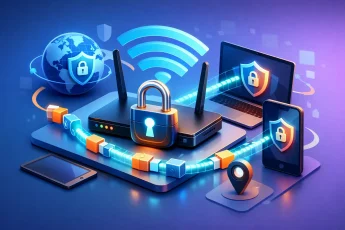
Look for broad server coverage, strong encryption, and automatic server switching when a route becomes unstable. If you connect through your phone’s hotspot, it also helps to have VPN protection that extends to connected devices. That saves time when you need coverage across a laptop, tablet, or streaming device without setting up each one from scratch.
Ease of use matters too. If changing locations takes five menus and ten guesses, you are less likely to use the tool when you actually need it. Strong privacy should feel controlled, not complicated.
Common problems when trying to bypass geo blocks
Sometimes the VPN is working, but the platform still knows where you are. That usually comes down to cached data, DNS leaks, or location permissions on your device. Clearing cookies, restarting the app, or disabling GPS-based location access can help.
Other times, the issue is server quality. A crowded server might be slow enough to trigger errors or obvious enough to be blocked. Switching to another server in the same country often fixes it.
There is also the account side. Some services use your account region, billing address, or previous login history as part of their checks. In those cases, changing your IP alone may not be enough. That does not mean the VPN failed. It means the platform is using more than one signal.
Safety matters as much as access
If you are searching how to bypass geo blocks, you are probably focused on the destination. Fair enough. But the route matters too. Public Wi-Fi, airport networks, hotel internet, and shared workspaces are already risky environments. If you are changing your connection path while using those networks, encryption is not optional.
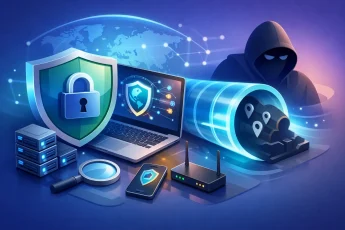
A VPN helps keep your traffic private while also changing your visible location. That matters for students accessing school portals abroad, freelancers sending files from coworking spaces, and travelers checking accounts on unfamiliar networks. Access without security is a shortcut that can cost more later.
Free tools can be tempting, especially for quick one-off use. But many come with slower performance, fewer server options, weaker privacy protections, or hidden limits that show up right when you need them most. If your connection matters, reliability should not be an afterthought.
Best use cases for bypassing geo blocks
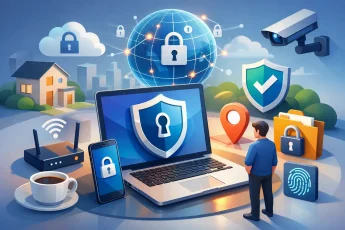
Streaming gets most of the attention, but it is far from the only reason people do this. Remote workers use location control to access internal systems that restrict foreign logins. Travelers need familiar apps and services that behave differently overseas. Students run into regional limits on research platforms, lectures, and library databases. Developers and global teams often need to test how services appear in different markets.
That range of use cases is important because it changes what “best” means. A student on campus Wi-Fi may care most about stable access and cost. A professional working with sensitive data may care more about encryption and trust. A traveler trying to cover several devices may value flexible data use and hotspot protection more than anything else.
The right VPN is not just a door opener. It is a control layer for how you connect.
What to expect in real-world performance
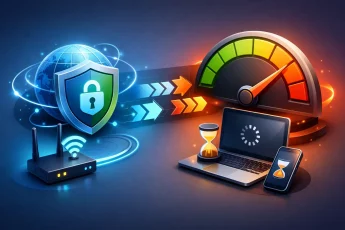
You may not always get the exact same speed as your normal local connection. Distance to the server, network congestion, and the platform you are accessing all affect performance. That is normal. The goal is not magic. The goal is a connection that stays fast enough, private enough, and stable enough to feel usable every day.
That is why premium VPN services stand apart. They invest in infrastructure, routing quality, and server rotation so users are not left fighting the system. A service like BexVPN is built around that expectation – fast access, protected traffic, and practical control across devices and use cases.
If geo blocks keep interrupting your work, travel, or downtime, the fix is not to keep retrying the same blocked connection and hoping for a different result. Take control of your route. Choose a VPN that gives you speed, privacy, and room to move, because the internet works better when your access is yours to decide.


Leave a Comment