

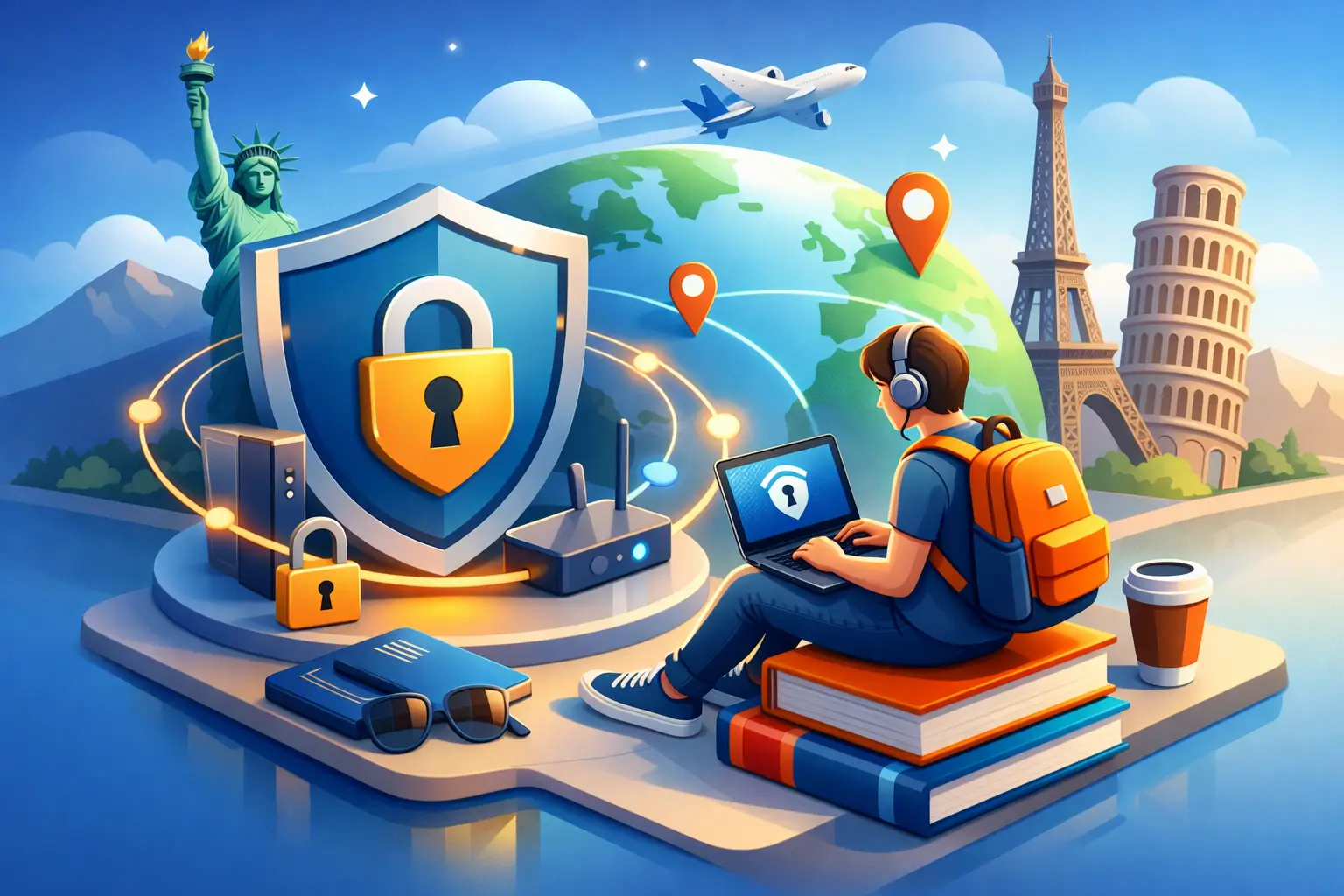
Landing in a new country with a class schedule, a student budget, and half your apps suddenly blocked is a rough welcome. Finding the best VPN for students abroad is not about chasing flashy features. It is about getting your school platforms, banking apps, group chats, and favorite services to work safely and consistently from day one.
That is the real test. A VPN for students studying overseas has to do more than change your location. It needs to protect you on campus Wi-Fi, keep speeds stable enough for lectures and calls, and avoid turning simple tasks into a technical project.
What makes the best VPN for students abroad?
Students abroad have a different checklist than the average traveler. You are not just logging in for a weekend trip. You are living online across borders for months at a time, usually on shared networks, often across multiple devices, and usually with limited patience for troubleshooting.
The first priority is security. Dorm Wi-Fi, library networks, coffee shops, airports, and shared apartments are convenient, but they are also the exact places where weak protection becomes expensive. If you are checking tuition payments, accessing student portals, or sending personal documents, encrypted traffic matters.
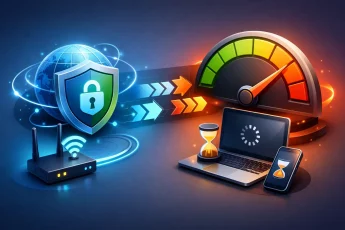
The second priority is speed. If your VPN slows down every video lecture, cloud doc, or late-night call home, you will stop using it. That is what separates a decent VPN from the best vpn for students abroad – strong protection without turning everyday internet use into a chore.
The third priority is reliability across regions. Students abroad often need access in both directions. You may need local access in your host country for transport apps, housing sites, and government forms. At the same time, you may want to reach services from home, whether that means banking, school accounts, media subscriptions, or apps that trigger extra security checks when they see a foreign login.
Price matters too, but not in the simplest way. The cheapest VPN is not always the best value if it drops connections, limits devices, or pushes you onto overloaded servers. Students need something affordable, yes, but also something dependable enough to cover daily life.
The features that actually matter
A large server list sounds impressive, but for students abroad, server quality matters more than sheer numbers. You want servers in the countries you actually use, with consistent performance at the times you need them most. That means evenings, exam weeks, and travel days – not just ideal conditions on a quiet weekday.
Strong encryption and a clear privacy stance are table stakes. If a provider is vague about how it handles your data, that is a warning sign. Students are already exposed to enough tracking through public networks, campus systems, and everyday apps. Your VPN should reduce that exposure, not add to it.
Multi-device coverage is another practical must. Most students switch constantly between laptop, phone, and tablet. Some also connect game consoles, smart TVs, or e-readers. If your VPN only works well on one device, it leaves gaps in how you actually live.
This is where hotspot protection becomes especially useful. A VPN that can extend coverage through your phone hotspot gives you more control when other devices cannot run the app directly or when local networks feel sketchy. For students abroad, that can mean safer access in hostels, temporary housing, or crowded campus spaces where you do not want every device exposed.
Easy setup matters more than some VPN companies admit. Most students do not want to compare protocols or tune settings just to join a class. The best option is one that works fast, stays stable, and gives you control without demanding technical expertise.
Where many VPNs fail students overseas
The biggest failure is inconsistency. Some VPNs perform well for a week, then become unreliable when you really need them. Maybe the app crashes during a lecture. Maybe your connection slows to a crawl when everyone in your building gets online. Maybe your banking app flags every login because the VPN IPs are overused.
Another common issue is device friction. A service may look cheap up front, but then it limits simultaneous connections or makes switching servers a hassle. That creates a bad trade-off for students who need fast access on the move.
Free VPNs are the clearest example of this problem. The price is attractive, especially when you are budgeting for tuition, rent, and groceries in another country. But many free services come with slow speeds, aggressive data caps, weak privacy practices, or all three. If your goal is secure and unrestricted access, those limits defeat the point quickly.
There is also the issue of coverage beyond a single device. Students do not live in a one-screen world. If your laptop is protected but your phone and shared hotspot are not, your setup is only partially secure. Partial security is still exposure.
How to choose the right fit for your situation
There is no single perfect VPN for every student abroad because your needs depend on how you study, travel, and connect. A student in a city apartment with stable broadband has a different risk profile than someone moving between dorms, trains, and public Wi-Fi every week.
If your top concern is privacy on shared networks, focus on encryption, a trustworthy privacy policy, and automatic protection when joining new Wi-Fi. If your top concern is accessing school systems and home-country apps without slowdowns, prioritize speed and server consistency in the regions you use most.
If you rely on multiple devices every day, look closely at connection limits and hotspot support. That extra flexibility can save time and reduce risk, especially when local internet options are inconsistent. A VPN that lets you protect more than one device without friction gives you more control over your digital routine.
And if budget is tight, look at total value rather than headline price. Trial data, shareable packages, and flexible plans can make more sense than a rock-bottom subscription that performs poorly when it counts. Paying less only helps if the service still does the job.
A smarter standard for students abroad
The best vpn for students abroad should feel like a quiet advantage, not an extra burden. You should be able to wake up, connect, and get on with your day – classes, research, messages, payments, entertainment, all protected and accessible.
That is why practical features matter. Smart server switching helps keep performance steady without forcing you to micromanage every session. Transferable data can be useful for students sharing access with friends, family, or roommates who also need protected connectivity. And hotspot coverage gives your phone a bigger role than just being another device – it becomes a secure gateway for the rest of your setup.
That combination is where a service like BexVPN fits naturally. Not just as a privacy tool, but as a flexible system for secure access across devices, locations, and everyday student use. Fast. Private. Built for real movement.
Red flags to watch before you commit
If a VPN promises everything but explains nothing, be careful. Vague claims about speed, privacy, or access usually fall apart under daily use. Students abroad need clear expectations, not marketing smoke.
Watch for hidden limits around devices, data, and server access. Be skeptical of services that feel strong on the sales page but weak in actual flexibility. If it takes too many steps to connect, if support is hard to find, or if performance drops sharply during peak hours, that friction will add up fast.
Also pay attention to whether the service is built for mobility. Students abroad do not use the internet from one desk on one network. Your VPN should match that reality.
What the right VPN gives you back
A good VPN does not just hide your IP address. It gives you breathing room. You can study on public Wi-Fi without second-guessing every login. You can keep in touch with home without fighting blocks or slowdowns. You can move between countries, campuses, apartments, and airports without feeling like your online life breaks every time your location changes.
That is what makes the decision worth getting right. The best choice is the one that protects your privacy, respects your time, and keeps up with how students actually live abroad.
If you are heading overseas for a semester or a full degree, choose a VPN that gives you control instead of complications. When your connection is fast, secure, and reliable, everything else gets easier.


Leave a Comment