

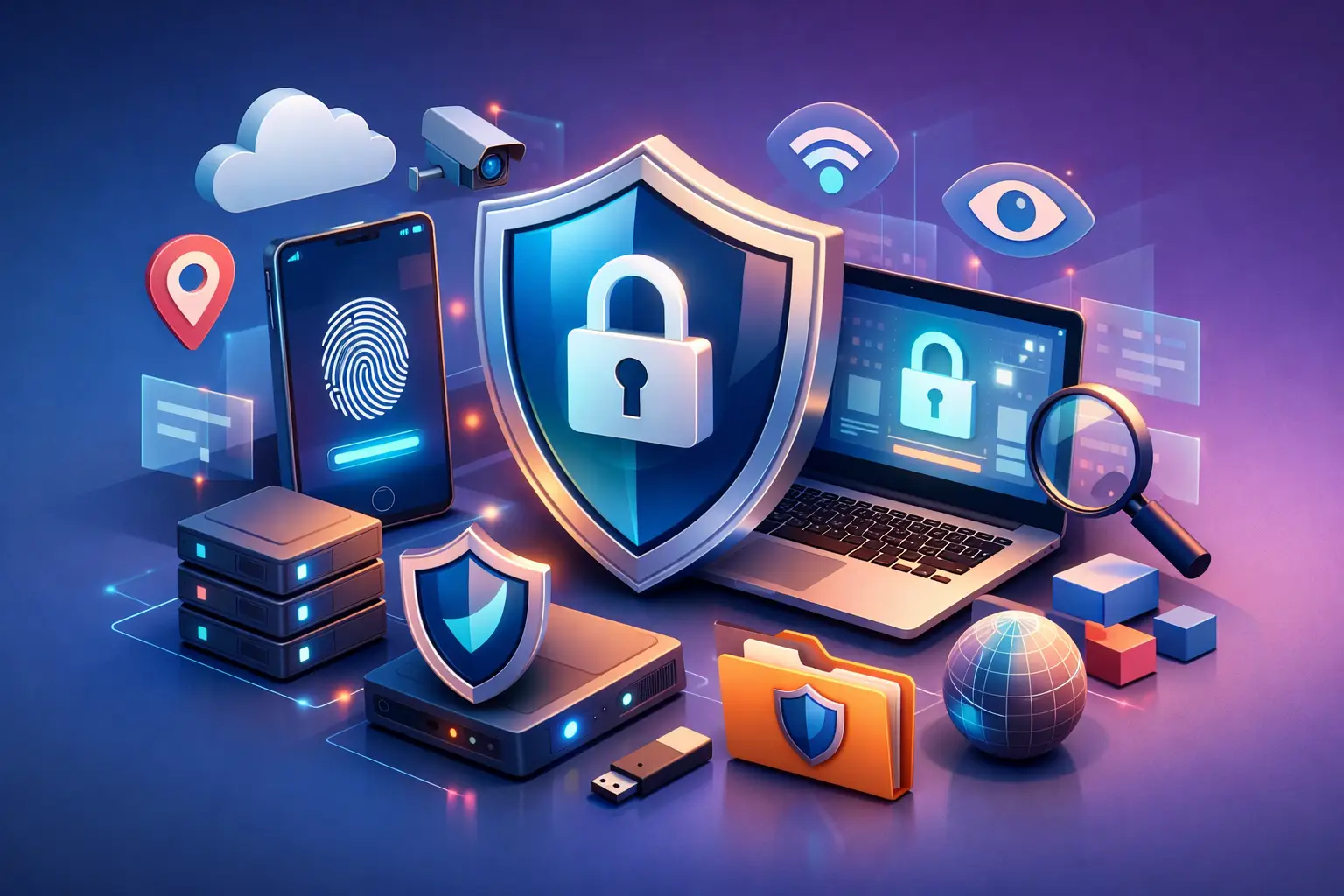
Your phone joins airport Wi-Fi. Your laptop opens three work tabs. A payment goes through on a cafe network. In less than five minutes, your digital life is exposed to more tracking, logging, and risk than most people realize. That is exactly why online privacy and data protection are no longer optional for remote workers, travelers, students, and anyone who lives online.
Privacy is not about hiding. It is about control. Data protection is not just for IT teams or regulated industries. It is the difference between using the internet on your terms or giving away pieces of your identity, habits, location, and activity every day without meaning to.
Why online privacy and data protection matter more now
The internet has become the default place for work, banking, school, streaming, shopping, and communication. That convenience comes with a trade-off. Every app, browser session, login, and network connection can generate data. Some of that data helps services function. A lot of it fuels tracking, ad targeting, profiling, and in the wrong hands, fraud.
For the average user, the biggest mistake is assuming risk only shows up during dramatic events like a breach or hacked account. In reality, the more common problem is constant low-level exposure. Public Wi-Fi can be unsafe. Mobile apps often collect more information than they need. Websites build detailed profiles from cookies, device fingerprints, and browsing behavior. Internet service providers and network operators may also log activity depending on local rules and business practices.
That means privacy is not a one-time setting. It is a daily operating choice.
What online privacy and data protection actually mean
People often group these terms together, but they are not identical.
Online privacy is about who can see what you do, where you are, what device you use, and how your behavior is tracked across services. It covers browsing habits, location data, search history, messages, account activity, and metadata.
Data protection is about securing the information itself. That includes passwords, payment details, files, work documents, customer records, photos, and anything personal or sensitive that could be exposed, stolen, altered, or misused.
You need both. Privacy without protection leaves your data vulnerable. Protection without privacy still leaves your behavior visible and trackable.
The hidden ways your data gets exposed
Some risks are obvious. Fake emails, weak passwords, and suspicious downloads still cause real damage. But many privacy failures happen through normal behavior.
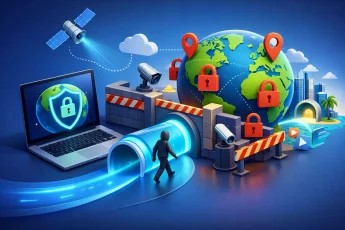
Public networks are a major example. Hotels, airports, coworking spaces, and coffee shops are convenient, but convenience is not security. Even when a network looks legitimate, you do not control who operates it, who else is on it, or how traffic is being monitored.
Then there is app overreach. A flashlight app does not need your contacts. A shopping app probably does not need precise location at all times. Yet many users click through permissions because access is easier than questioning the request.
Tracking also happens quietly in the background. Sites can identify users through browser characteristics, screen size, language settings, and device behavior even when cookies are limited. That means private browsing modes help in specific cases, but they are not a full privacy solution.
The trade-off most people get wrong
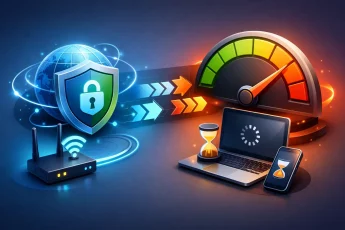
Many users think privacy tools always mean slower speeds, annoying setup, or broken websites. Sometimes there is a trade-off. Encryption can add overhead. Strict tracker blocking can disrupt site functionality. Some services challenge logins when they detect unusual locations.
But that does not mean the answer is to give up and browse unprotected. It means choosing tools that balance speed, control, and ease of use. Strong privacy should fit real life. If a tool is too frustrating, people stop using it. Protection that stays on is far better than protection that looks good on paper but gets disabled by day three.
That is where modern VPN use has become more practical. A quality VPN can secure traffic, reduce exposure on public networks, and help separate your activity from the local network you are using. For users who work across phones, laptops, and shared devices, convenience matters just as much as encryption.
How to improve online privacy and data protection without turning it into a full-time job
Start with the basics that create the biggest gain.
Use strong, unique passwords for every critical account, especially email, banking, cloud storage, and work tools. If one password gets exposed and you reuse it, attackers do not stop at one login.
Turn on multi-factor authentication wherever possible. It is not perfect, but it dramatically reduces the damage from stolen credentials.
Be selective with app permissions. If an app does not need microphone, camera, contacts, or continuous location access, deny it. You can always enable access later if a legitimate feature requires it.
Keep devices updated. Many attacks do not rely on genius. They rely on people delaying security patches.
Use encrypted connections and avoid sending sensitive data over networks you do not trust. This is one reason VPN protection remains a practical layer for people who move between home, mobile, office, and public access points.
For users who need coverage beyond one screen, it also helps to think bigger than a single device. If your phone becomes a hotspot for a tablet or laptop, those connected devices can inherit the same risks as the original connection. Protection that extends across your setup is simply more useful than privacy that stops at one endpoint.
Online privacy and data protection for work, travel, and daily life
The right privacy habits depend on context.
For remote professionals and freelancers, the main concern is often client confidentiality, account security, and safe access from variable locations. A fast connection matters because slow protection gets bypassed during deadlines. Reliable encrypted access matters because work does not pause when you are in transit.
For students, the risks are a little different. Shared housing, campus networks, constant app usage, and frequent logins across devices create a wide attack surface. Convenience matters here too. If protection is hard to use, it will not last past midterms.
For travelers, location exposure and untrusted networks are constant concerns. You may need secure access in hotels, airports, public transport hubs, and unfamiliar mobile networks. You may also run into content restrictions or regional limitations that make everyday online tasks harder than they should be.
For everyday users, the issue is accumulation. One app here, one weak password there, one unprotected session on public Wi-Fi, one overshared permission request. None of it feels urgent in isolation. Together, it creates a profile of your life that other companies, advertisers, bad actors, and data brokers can monetize or exploit.
What to look for in real protection
Speed, consistency, and control. Those three things matter more than flashy claims.
A privacy tool should be easy to activate, stable enough to keep running, and flexible enough to support how people actually connect. That includes mobile use, hotspot sharing, and switching between locations without turning security into a technical project. For many users, the best protection is the one that covers multiple devices and adapts automatically when networks change.
It also helps when privacy services respect the reality of modern users. People stream, work, study, make payments, and move between regions. They do not want ten different tools for ten different tasks. They want one clear layer of control that keeps them protected without slowing everything down.
That is why providers like BexVPN are built around more than basic tunneling. Features such as protected hotspot sharing, automatic server switching, and flexible data use match the way people actually live online – across devices, across networks, and across borders.
Privacy is a decision, not a setting
No tool makes you invisible. No app can erase every risk. Anyone telling you otherwise is selling fantasy.
But that does not weaken the case for stronger privacy. It strengthens it. Real online privacy and data protection come from layers that work together: smarter permissions, stronger authentication, safer connections, current software, and tools that keep your traffic protected when your environment is not.
The goal is not perfection. It is control. More control over who sees your activity. More control over how your data moves. More control over how much of your life gets collected, logged, profiled, or exposed.
That kind of freedom is worth defending every time you connect. Make your privacy setup simple enough to keep, strong enough to matter, and flexible enough to move with you.

Leave a Comment