

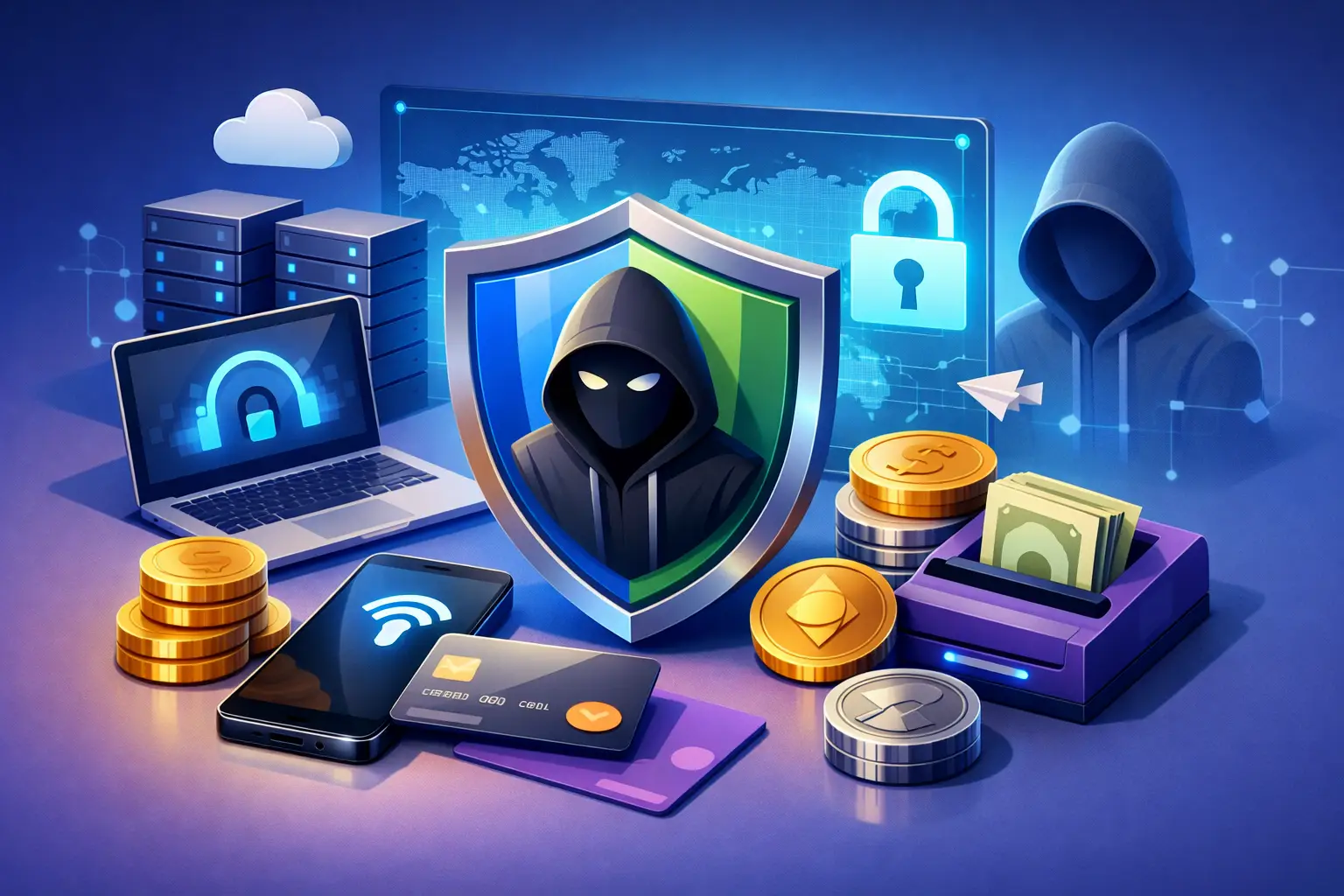
Paying for privacy with your everyday credit card defeats the point for a lot of people. If you are searching for a vpn with anonymous payment, you are usually not chasing a gimmick. You want less personal data tied to your account, fewer traces in billing records, and more control over how much of your identity a provider can see.
That goal makes sense. But it also needs a reality check. Anonymous payment is useful, yet it is only one layer of privacy. If the VPN keeps intrusive logs, forces unnecessary account details, or performs poorly enough that you stop using it, the payment method alone will not save you. The right choice is a service that combines payment privacy with strong fundamentals – speed, reliability, practical device coverage, and policies that reduce exposure from the start.
What a vpn with anonymous payment really does
A VPN with anonymous payment helps separate your billing trail from your online protection tool. Instead of handing over a card tied to your legal name and home address, you may be able to pay with crypto, prepaid methods, giftable packages, or other options that reveal less about you.
That matters for travelers on unstable networks, freelancers working across borders, students accessing restricted platforms, and privacy-focused users who simply do not want every digital service connected to the same payment profile. Less personal data collected at signup often means less personal data exposed later if records are requested, leaked, or mishandled.
Still, anonymous payment is not the same as total anonymity. If you sign up using your main email, reuse passwords, or browse while logged into personal accounts, your identity can still be linked through other channels. A smart user treats payment privacy as one control inside a bigger privacy strategy.
Why payment privacy matters more than most people think
A lot of users focus on encryption and server count first. Fair enough. Those are core VPN features. But billing data is often one of the easiest ways to connect a service back to a real person.
When a provider requires full billing details, it creates another store of sensitive information. That can include your name, payment processor records, transaction history, and sometimes location-based clues. If your priority is freedom and control, reducing that paper trail is a practical move, not paranoia.
This is especially relevant for users who rely on VPNs in shared housing, while traveling, in restrictive workplaces, or on public Wi-Fi. It also matters to professionals who separate personal identity from client activity, and to users who prefer not to advertise their privacy habits to banks or app stores.
The features that matter more than the payment method
If a provider advertises a vpn with anonymous payment, do not stop there. Look at the full privacy setup.
Minimal signup requirements
The best providers do not ask for more than they need. If a VPN claims to support private payments but still pushes you to hand over a full identity profile, the value drops fast. A lean signup process is part of the privacy promise.
Clear logging practices
This is non-negotiable. If the provider stores detailed activity logs, your payment method becomes a side issue. You want transparency about what is collected, what is not collected, and how long any system data is retained.
Reliable performance
A slow VPN gets turned off. That is the truth. Privacy tools only work when people actually use them. Fast servers, stable connections, and automatic switching when a server drops all matter because they keep protection active without constant babysitting.
Protection across more than one device
A lot of users do not live on a single laptop anymore. They move between phones, tablets, work devices, and shared connections. If your VPN can extend coverage through hotspot sharing or flexible device use, it becomes far more useful in real life.
Common anonymous payment options and their trade-offs
Not all private payment methods offer the same balance of convenience and anonymity.
Cryptocurrency is the option most people think of first. It can reduce direct ties to your banking identity, but it is not automatically untraceable. Some users assume crypto equals invisibility, which is not how it works. The level of privacy depends on the currency, wallet practices, and how the transaction is handled.
Prepaid cards can be simple and familiar. They may offer a decent privacy buffer if purchased carefully, but availability and acceptance vary. Some providers do not support them directly, and some prepaid products still require registration depending on the issuer.
Giftable or transferable service packages are another practical route. They can help separate the person using the service from the person funding it, and they add flexibility for families, teams, and shared households. That model is especially useful for users who want privacy without complicated setup.
There is no universal best method. It depends on what you value most – convenience, distance from your banking identity, ease of renewal, or the ability to share access.
How to evaluate a VPN with anonymous payment
The strongest choice is not the provider shouting the loudest about anonymity. It is the one that makes privacy usable.
Start by checking whether the service can be used without exposing more information than necessary. Then look at payment flexibility. After that, verify the basics: connection speed, app simplicity, server stability, and support for the devices you actually use.
A practical VPN should also fit how people connect now, not how they connected ten years ago. If you use your phone as a secure hub for other devices, hotspot coverage matters. If you share access with family or teammates, transferable data or shareable packages matter. If you move between regions, automatic server switching can keep protection running when network conditions change.
That is where a service like BexVPN stands out naturally. It is built around freedom and control, but with features people can use right away – protected hotspot sharing, flexible data packages, and privacy-friendly payment compatibility without making setup feel like a project.
Red flags to avoid
Some providers market privacy aggressively while creating unnecessary risk behind the scenes. Be careful if you see vague promises instead of specific policies. “Anonymous” means very little if the provider does not explain what account data it collects.
Watch for forced app-store billing if your goal is payment privacy. Be cautious with services that demand identity verification for basic consumer access without a clear reason. And do not ignore usability. A VPN that disconnects often, struggles on mobile, or turns simple tasks into support tickets is not giving you real control.
Price can be a red flag too. Extremely cheap plans may look appealing, but if the business model depends on data collection, weak infrastructure, or aggressive upsells, the privacy trade-off is obvious. Fast, secure, dependable service costs money to run.
Who benefits most from anonymous-compatible VPN payments
This feature is not niche anymore. It fits a wide range of users.
Remote professionals often want separation between personal financial records and work-related online tools. Students may want secure access on campus or shared networks without adding another recurring card charge. Travelers need flexibility when crossing regions or using unfamiliar networks. Privacy-conscious households may prefer shareable coverage they can fund without tying every user to the same identity trail.
Even mainstream users benefit from data minimization. You do not need to be hiding something to want fewer companies collecting your details. You just need to value control.
Privacy is strongest when it is practical
A vpn with anonymous payment is a smart move when you want less exposure at signup and more control over your digital footprint. But the payment method should support a bigger outcome: everyday protection you will actually keep switched on.
Choose a provider that respects your privacy before, during, and after payment. Choose one that performs under pressure, works across the devices you rely on, and gives you freedom without friction. The best privacy tools do not just promise less tracking. They help you move through the internet with more confidence, less compromise, and control that stays in your hands.

Leave a Comment